Test Analytics private beta
Identify, track, and fix problematic tests with ✨Test Analytics✨, now in private beta.
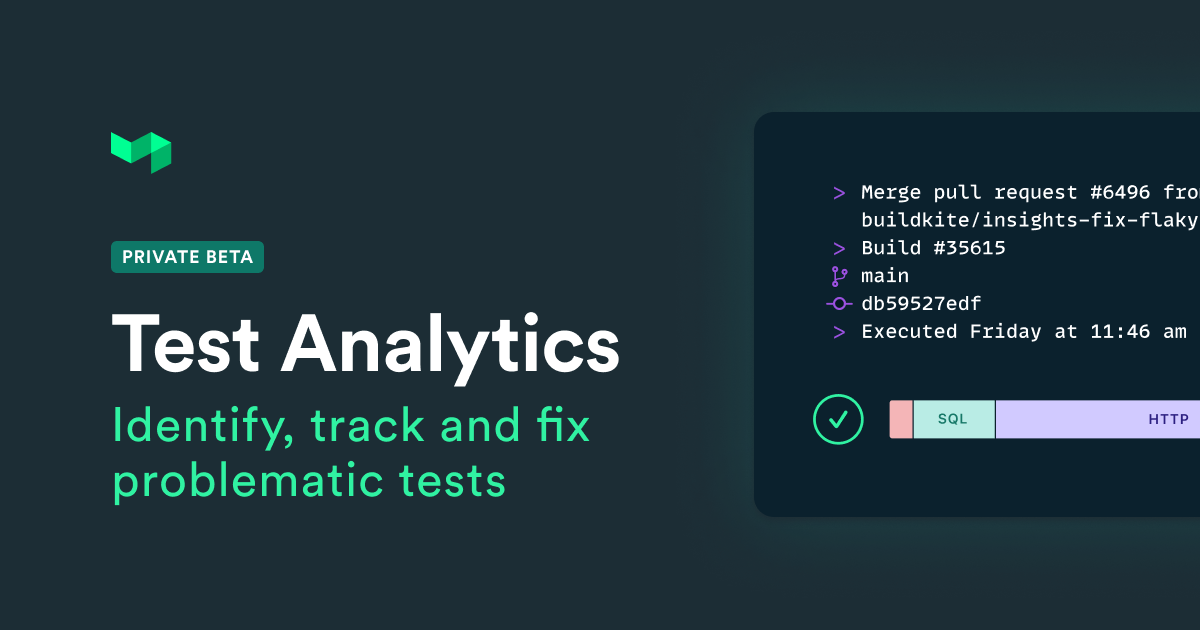
🔍 Identify flaky tests: See which tests are most disruptive with automatic flaky test identification and analysis over time.
👀 Monitor speed & reliability: Get alerts when slow tests are introduced.
📈 Deeply analyze performance: First-class framework integrations provide in-depth performance analysis, helping you find external dependency bottlenecks and more.
🏎 View real-time results: Watch your test suite run in real-time and get immediate performance insights.
Learn more and join our waitlist at https://buildkite.com/test-analytics.
Michelle
Job Priority Attribute for Pipeline Steps
For teams running a lot of jobs who want more control over what order their jobs run in, we've introduced the Job Priority attribute to specify its priority within its queue. 🙋🏻♀️
It's a new attribute defined on a step in the pipeline configuration that changes how the dispatcher assigns work to agents. The higher the value you set for priority, the sooner a job will be prioritised. 🔝
Our recently released Eager Concurrency feature can also be used in conjunction with Job Priority.
Libby
SCIM deprovisioning support for Okta and Azure AD
Enterprise teams using Okta or Azure AD for SSO with their Buildkite organization can now optionally enable SCIM to automatically deprovision users ⚡️
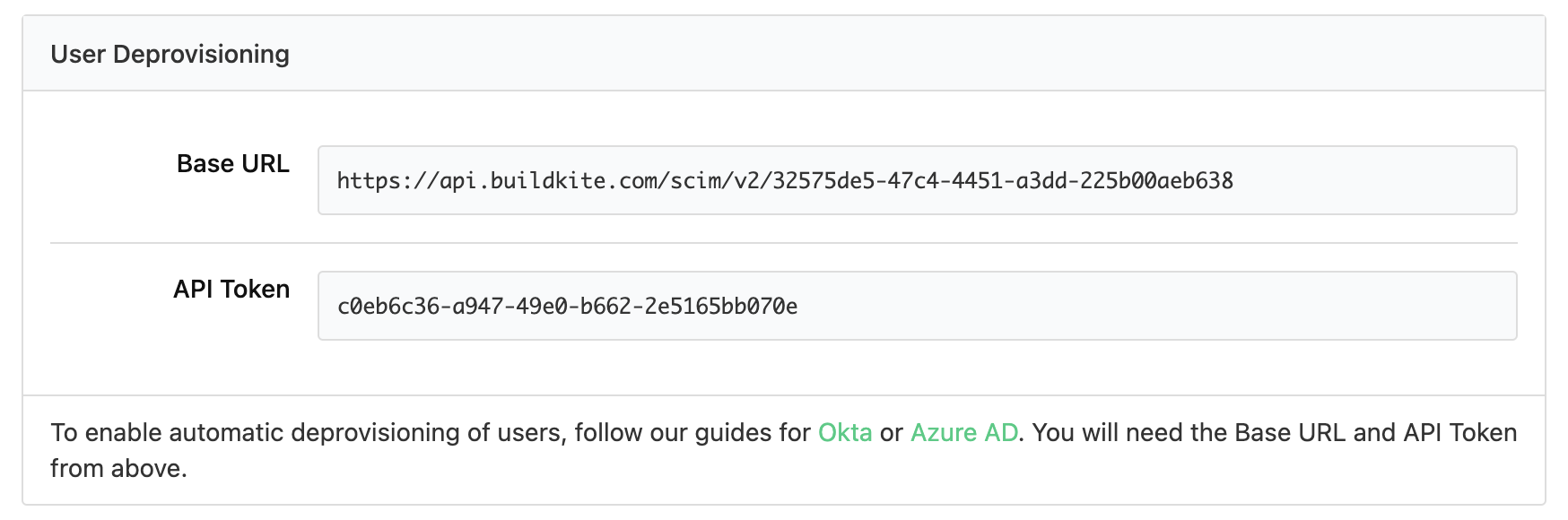
Okta and Azure AD SSO with SAML is still available to all users.
A step-by-step guide to enabling SCIM support is available in our Single Sign-On with Okta and Azure AD documentation 📚
Harriet
Eager Concurrency
Traditionally, concurrency groups enforce strict ordering of the jobs within them. Concurrent jobs will be limited to the number set for the group, and will only start executing in the order they were created. 📝
However, sometimes you only need the limit, and it's fine for eligible jobs to run in whatever order their dependencies allow. 🏃🏻♀️
Which is why we've added a concurrency_method step attribute you can set to 'eager'. This will allow any job, up to the concurrency limit, to start as soon as it's eligible, regardless of creation order. 🔀
As an example:
steps:
  - command: echo "Using a limited resource, only 10 at a time, but we don't care about order"
    concurrency_group: saucelabs
    concurrency: 10
    concurrency_method: eager
For more information, check out our guide to Controlling Concurrency.
Libby
One-shot agents with the acquire-job flag
For teams running their own compute scheduler or those needing single-use agents, we've added the --acquire-job flag to the Buildkite Agent 🧰
With this flag, agents are mapped 1:1 with jobs. This makes them perfect for folks using a system like Kubernetes, Nomad, or ECS, or anyone who wants a clean-room environment.
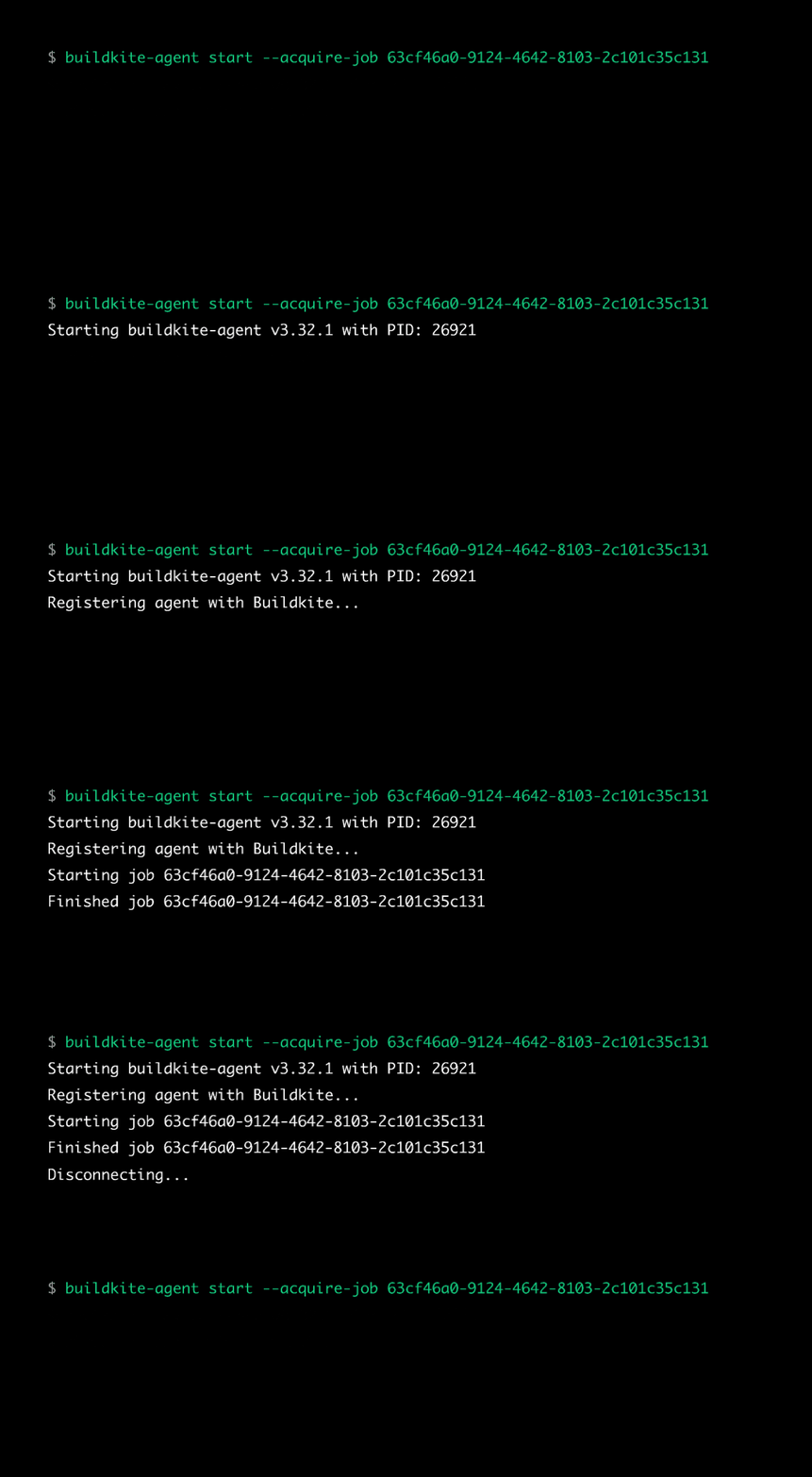
To get started, pass the --acquire-job flag with the job ID to the buildkite agent start command. When you start an agent with this flag it will run the job then exit rather than polling for more work.
You can use acquire-job with agents v3.17.0 and above, anywhere that the agent can run 🏃🏻✨
For details on how to use the flag, see the agent cli documentation on Running a single job.
Harriet
HMAC signed webhooks
For teams wanting to add an extra layer of security to their webhooks, we have just added the option to include HMAC signatures with your Webhook Notification services 🔐
You'll find the HMAC signature option under the Token section when editing or creating Webhook Notifications.
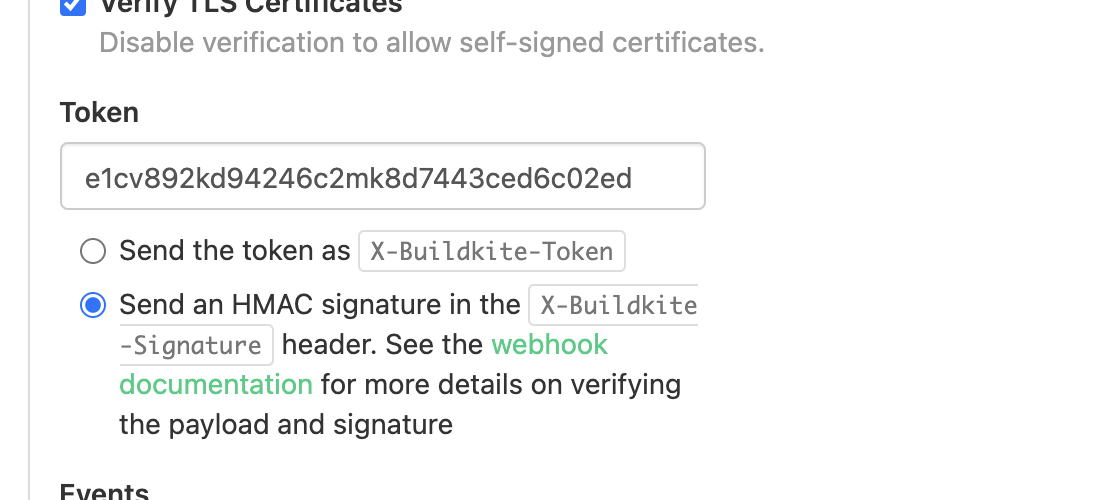
For more information on verifying webhook signatures and defending against replay attacks, see our Webhook API documentation.
Harriet
Conditional webhooks
For complete control over when to trigger builds, use conditional expressions to filter incoming webhooks 📥
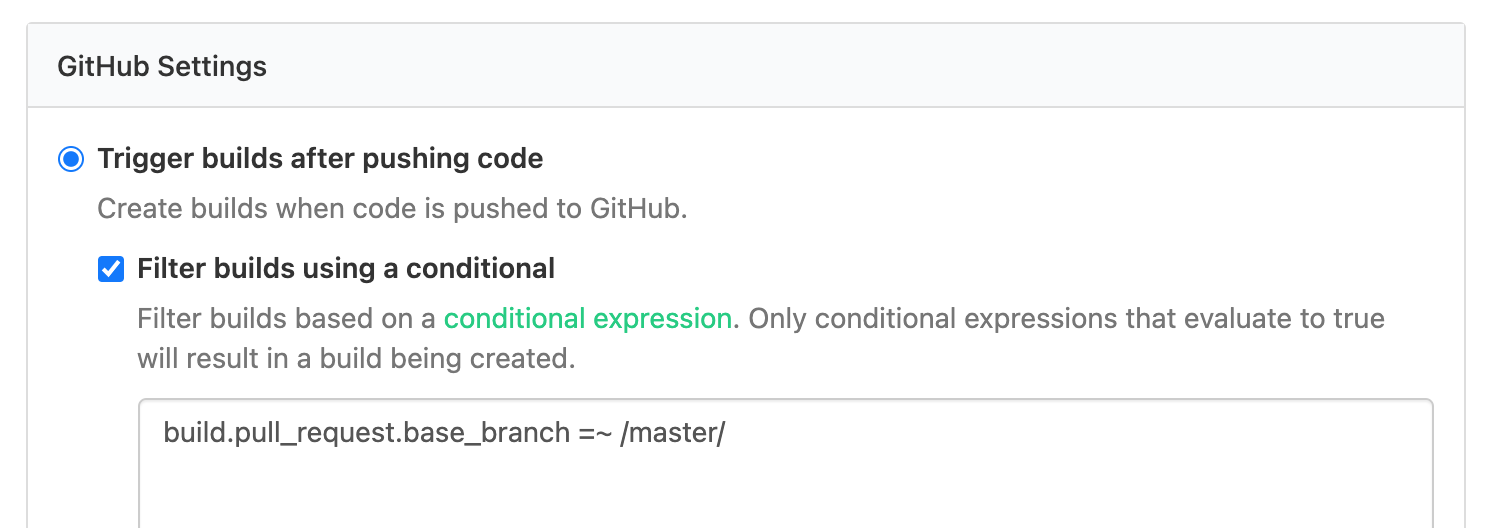
Build filtering with conditionals is available with any repository provider. You can add a conditional on your Pipeline Settings page or via the REST API 🔀
For more information on supported conditionals, check out our guide to Using Conditionals.
Harriet
PagerDuty Change Events Integration
Send Change Events to your PagerDuty services whenever a build completes 🚨
Filter Change Events notifications with conditionals to make sure you're sending only the information your team needs
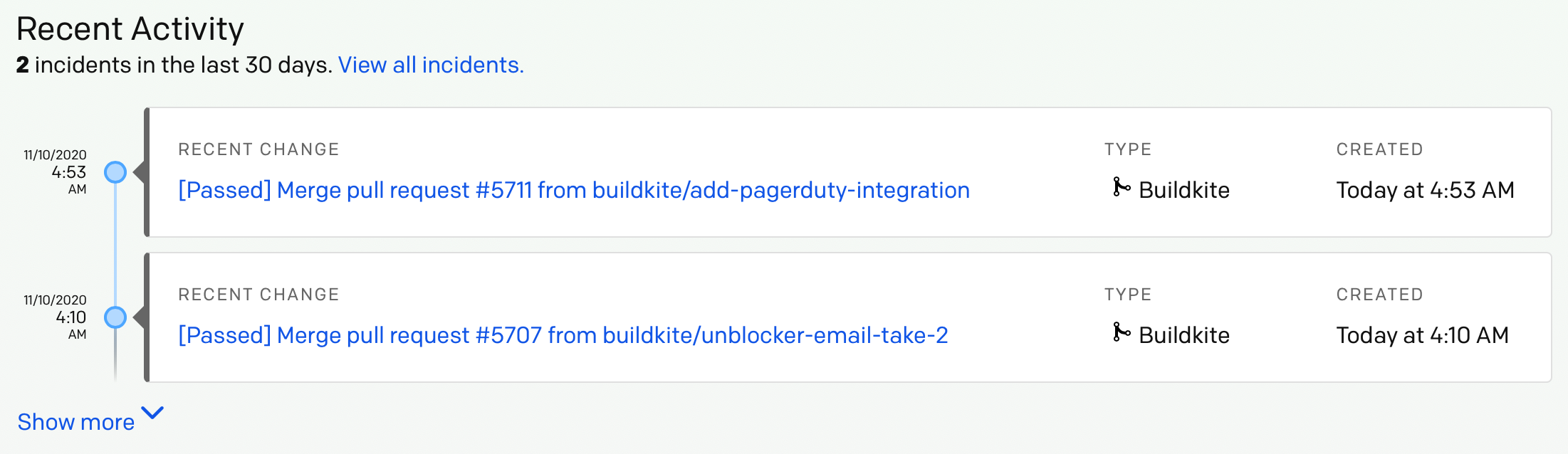
The Buildkite integration can be installed from the PagerDuty Service Directory 📚
Find the step-by-step guide to sending PagerDuty change events in our PagerDuty integration guide.
Harriet
Announcing the Buildkite Newsletter
We've had a lot to talk about at Buildkite lately! We relaunched our blog, we've been updating and revamping our documentation, and have a ton of upcoming projects, customer stories, and tutorials we can't wait to share.
If that sounds like a lot to keep track of, we've got you covered! We're launching a 📰 newsletter 📰 to provide curated highlights, so you can stay in the know whatever your schedule ✨
Sign up here and you'll get a handy digest of our favorite features, updates, and blog posts delivered directly to your inbox 🗞📬🚀
For the latest news as it happens, this changelog will remain your one-stop source for Buildkite updates. You can also check out the blog and our docs directly to stay up to date on all things Buildkite 💚
Nick
Keep your secrets safer
Nobody likes accidentally leaking secrets in a build log. The Buildkite agent can now redact secrets present in your environment variables before they are uploaded to your logs 👷🏻
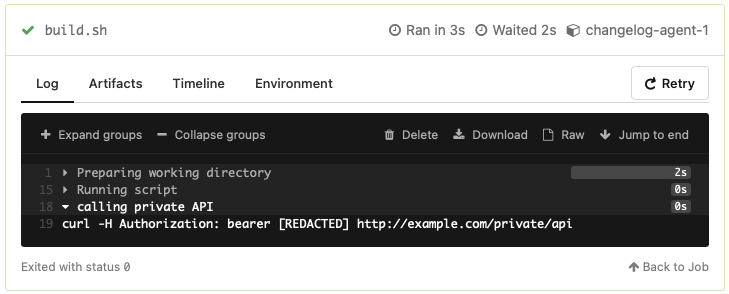
Turn it on for your agents, and add your custom variable patterns.
Thanks to Buildkite customer David Baggerman for doing the initial work on this feature 💚
Sam
New in the Buildkite Agent: Remove a build annotation
With the release of v3.28.1 of the Buildkite Agent, we've introduced a new command to remove existing annotations from a build 📝🚫
buildkite-agent annotation remove removes an annotation entirely, where previously you could only blank their content by passing an empty string to buildkite-agent annotate.
This allows for some creative uses like showing bits of context while builds, tests, deployments or lints run, and removing them from view when they're no longer relevant.
We're looking forward to hearing about what you make with the extra annotation abilities 😄🎉
Jessica
Datadog tracing for CI builds
For teams needing detailed observability in their CI/CD pipelines, we've recently released support for configuring Datadog as a tracing backend on the Buildkite agent to help monitor build and job metrics 🕵🏻
Huge thanks to our open source collaborators 💚
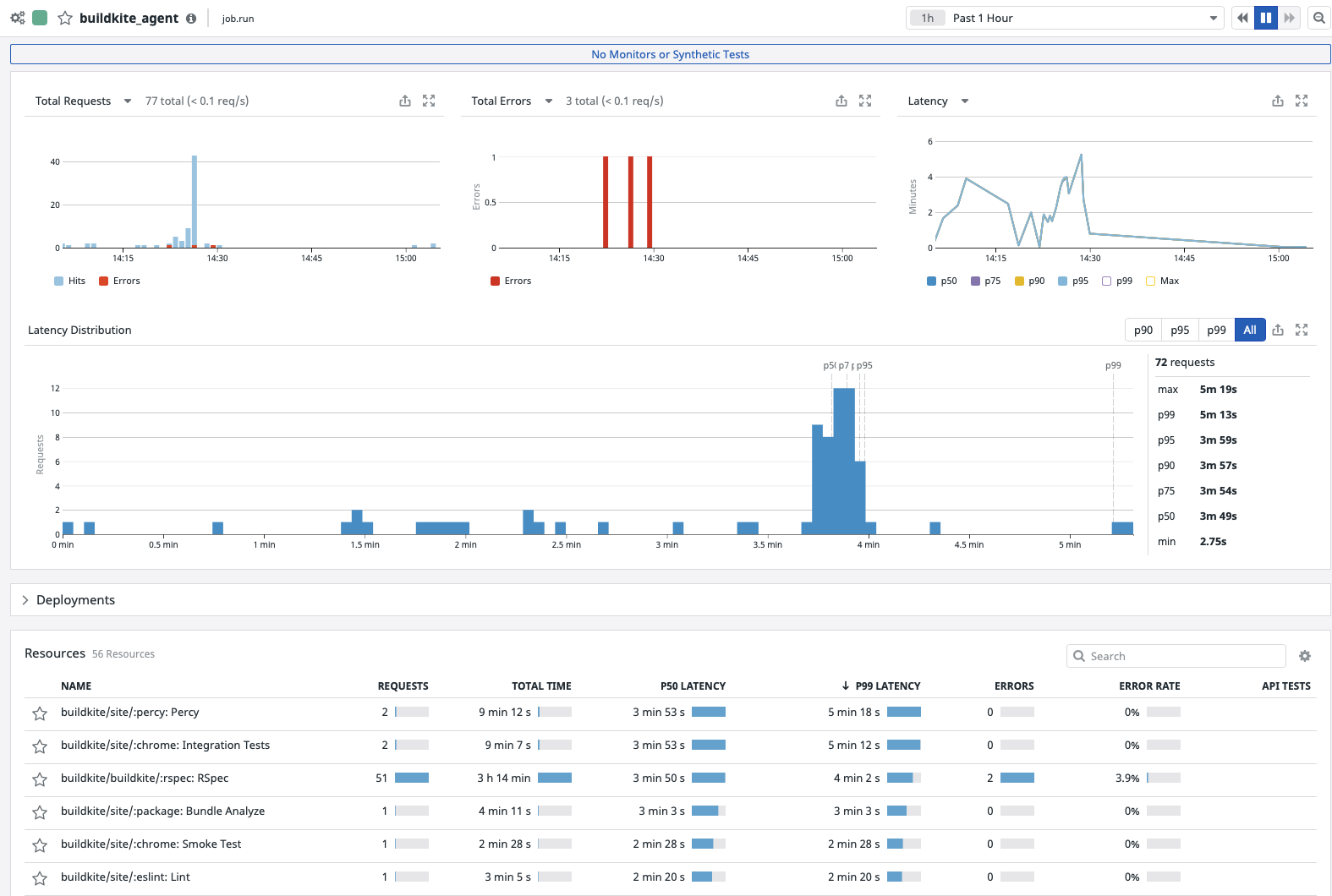
To get started, install the Datadog Agent on your Buildkite Agent machine(s) and configure the following environment variable: BUILDKITE_TRACING_BACKEND="datadog"
For more details, check out the agent configuration docs.
Chloe
Official Buildkite Terraform provider :terraform:
Folks using Terraform to manage their infrastructure, great news! We've published an official Buildkite provider to the Terraform Registry 
For details of the configuration syntax and supported resources, check out the official docs on the Terraform Registry.
A big thanks to Buildkite customer Jarryd Tilbrook who developed the initial version of the provider and was happy for us to pick it up 💚
James
Introducing early access to Buildkite’s Managed macOS CI
Update, June 2021: We are no longer offering Buildkite-hosted macOS agents. For more information on spinning up your own Buildkite agents on macOS, see this guide from Stark and Wayne or check out the docs.

We are excited to announce an exclusive program for our macOS agents managed service, providing the first scalable CI platform for Mac and iOS development 🚀
To learn more and to resister your interest, check out our introduction to Hosted Mac Agents and our blog post about the announcement 📚✨
Keith
Copy environment variables to clipboard
Those occasional times when you need to grab a copy of all the environment variables on a job, wouldn't it be great if there was a button for that? 🤔

Now there is! We've added a button to the job Environment tab to copy all of your environment variables and their values straight into your clipboard 🚀
Shevaun
Archive Pipelines 🗃
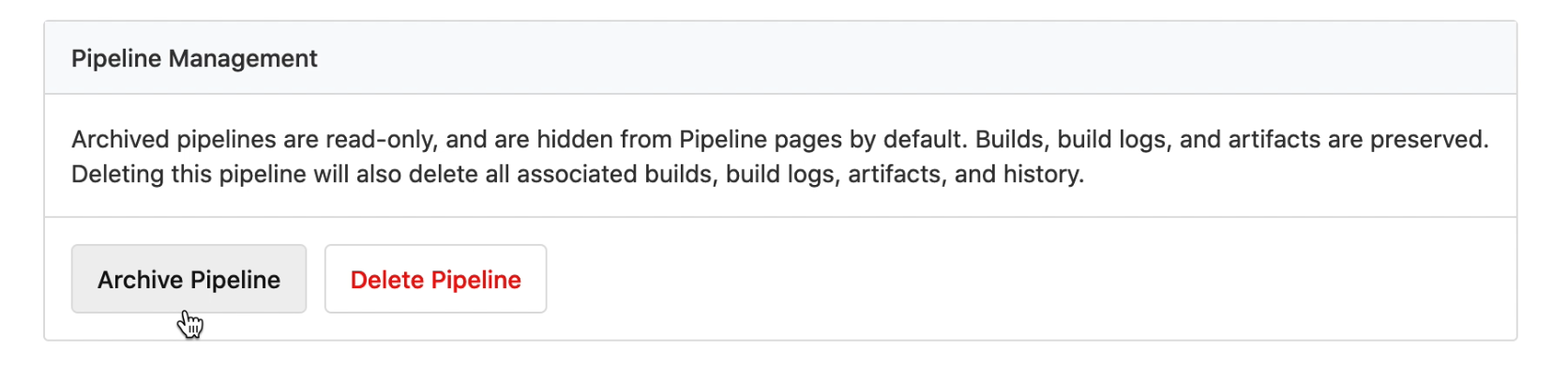
If you manage a lot of pipelines you will be pleased to hear that we've added the ability to archive pipelines that are no longer in use. Archived pipelines have all their historical data preserved, but won't run new builds, and are not shown on the Pipelines page by default. You'll find a list of archived pipelines in the Team Selector:
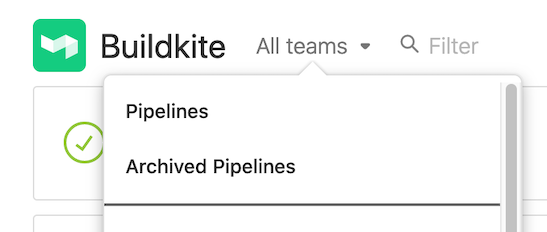
Archive pipelines from the Settings page, under Pipeline Management, or using the GraphQL API.
Happy Archiving!
Juanito
Quickly toggle UTC times on Buildkite
Establishing a shared timeline when troubleshooting or digging into recent builds can be a challenge, especially for distributed teams. To help make this a little easier, we’ve added the ability to toggle between local time and UTC by clicking on a timestamp ⏱
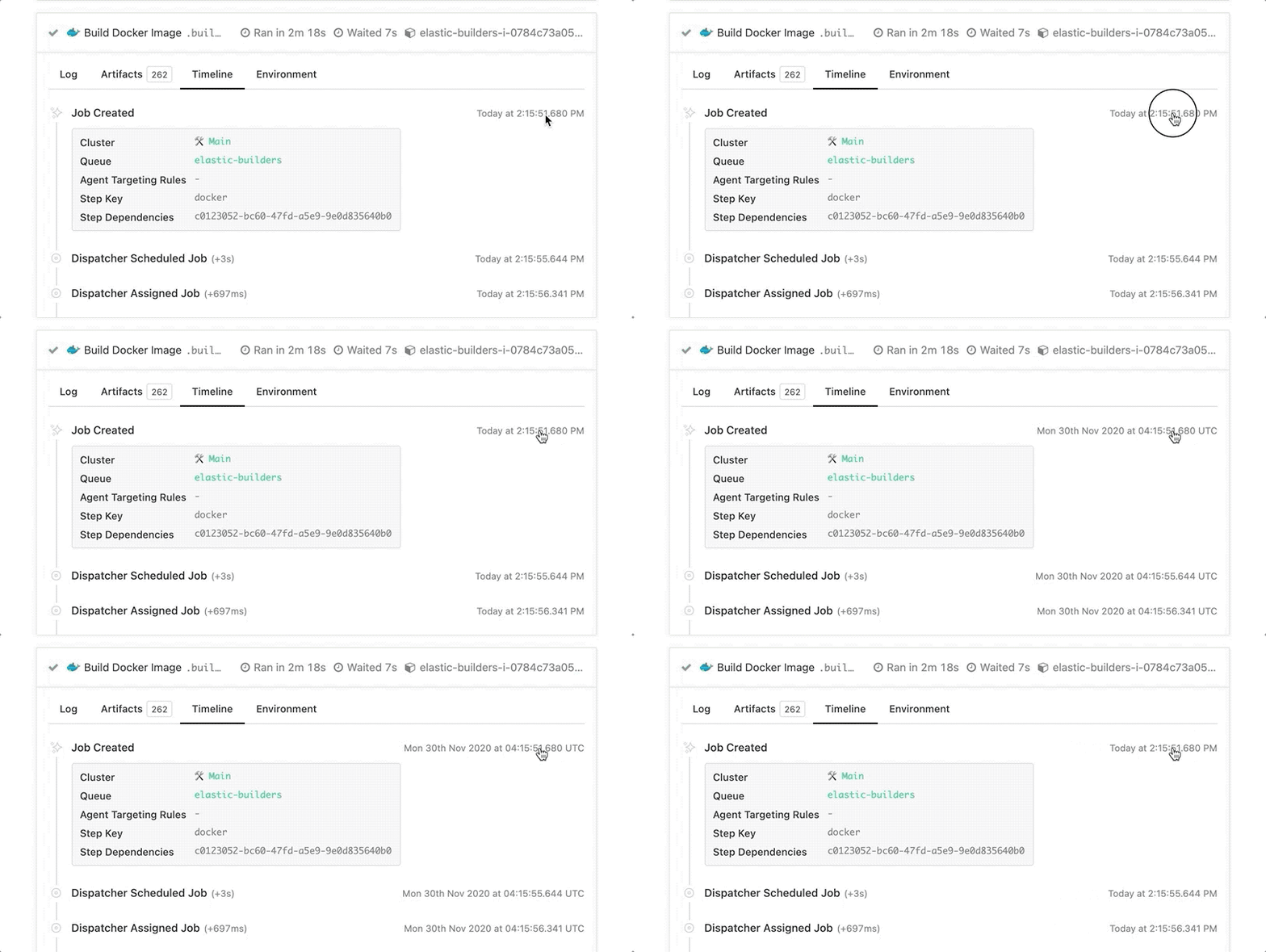
As an added bonus, UTC times include the full date and are shown in 24-hour time regardless of your browser’s default locale settings ✨
Jessica
Webhooks can be auto-created for GitHub repositories
We've updated our GitHub app, adding the option to automatically create webhooks for new pipelines 🔀
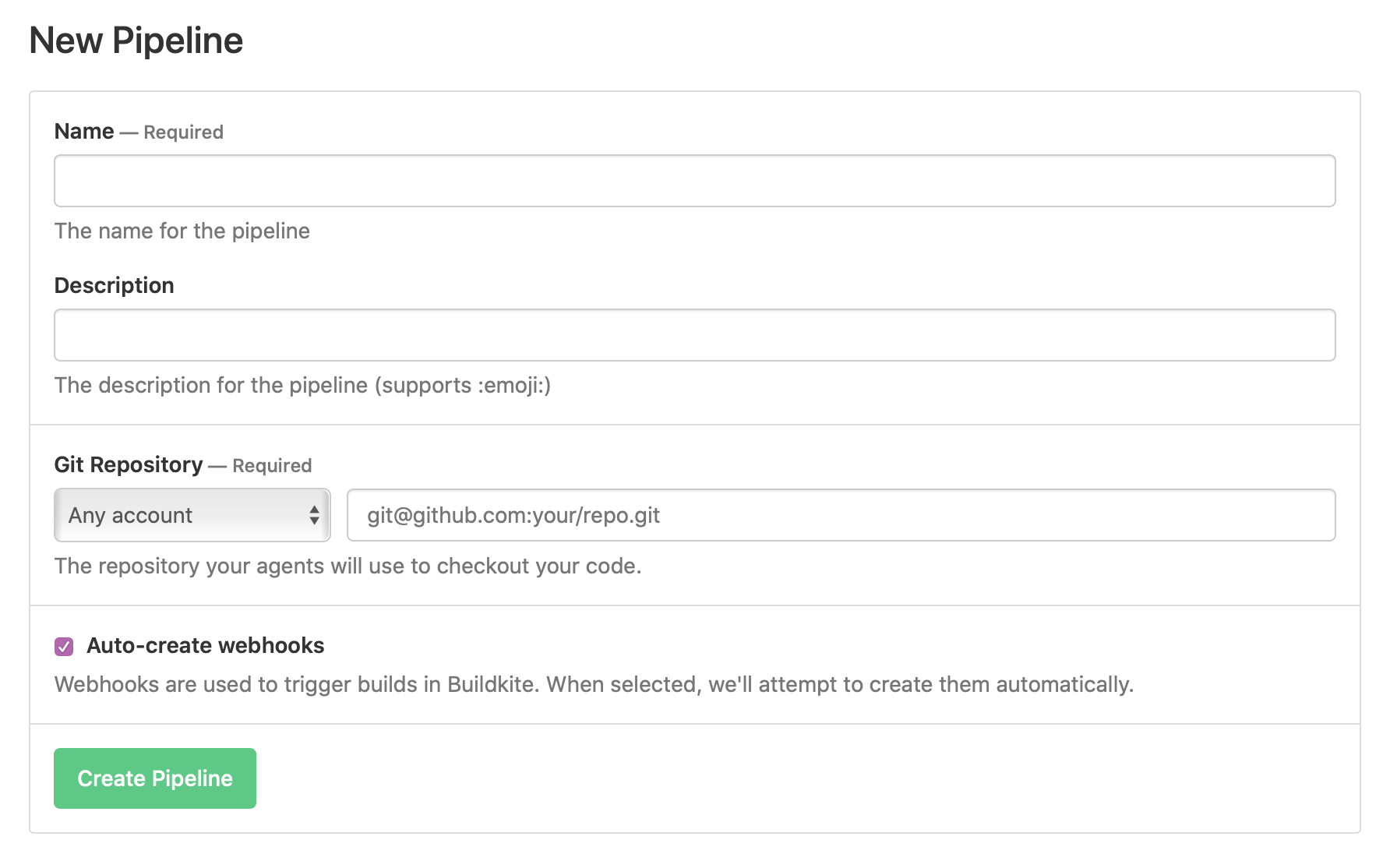
The Buildkite GitHub App now additionally requests the webhook read & write permission for Repositories. We'll only use this permission to create new webhooks when you explicitly check the 'Auto-create webhooks' box during pipeline setup 🔏
Eleanor
Share git checkouts with the git-mirrors Agent experiment
Teams with large repositories, we'd love for you to try out the git-mirrors experiment flag, available on all agents v3.10.0 and above. This enables you to have a single git clone per host, to help speed up git operations and reduce network and disk usage 👯
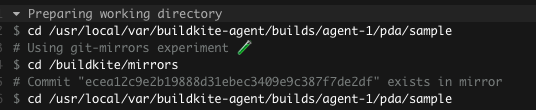
You can get started using git mirrors by setting the git-clone-mirror-flags experimental agent config option.
Let us know about any questions or issues on the Shared Git Checkouts topic in the Buildkite Community Forum 📝
Harriet
Introducing the YAML Steps editor ✨
After 2 years in beta, we are thrilled to promote the YAML Steps editor to our recommended way of managing your pipelines 🎉
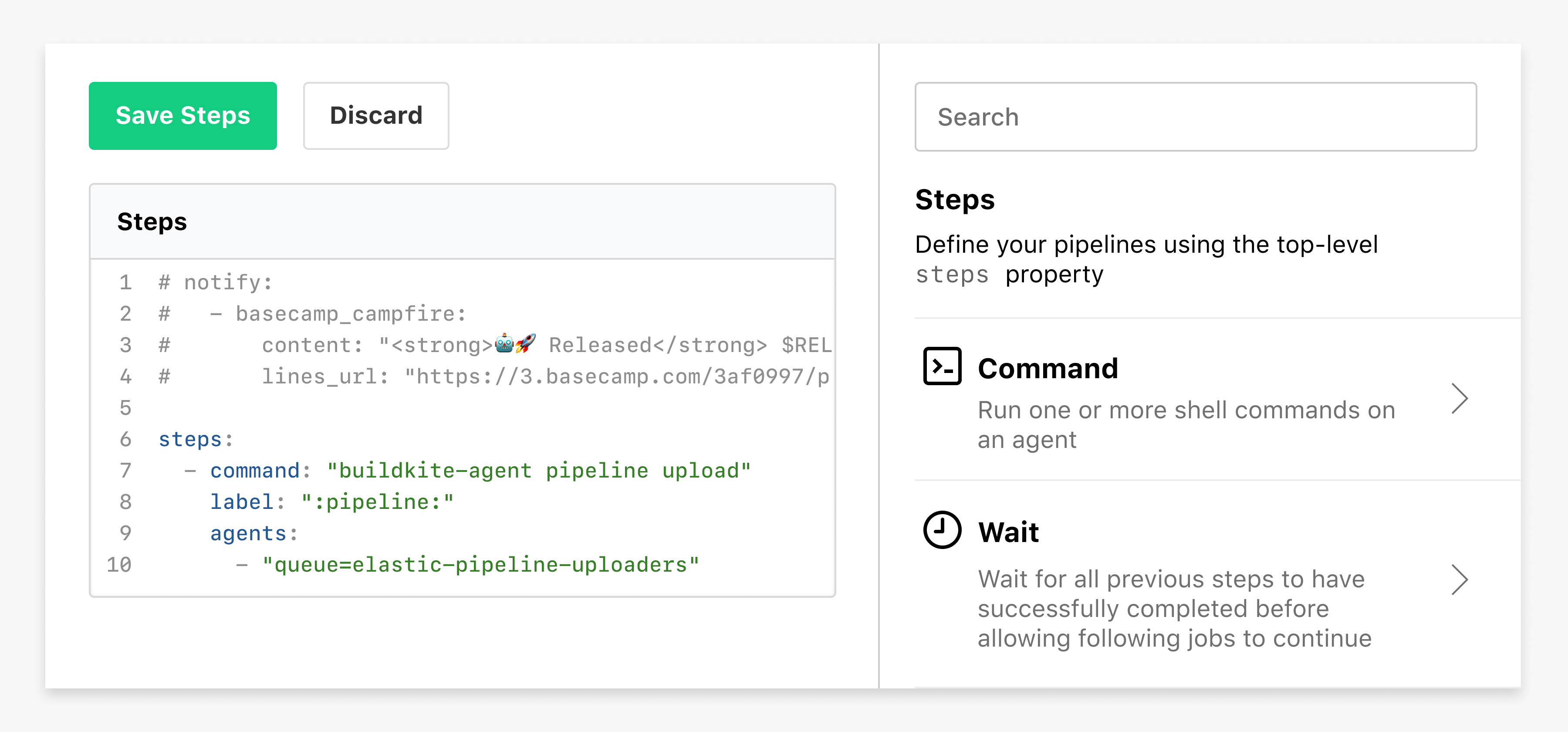
After migrating your pipeline to YAML Steps, you can find the new sidebar by clicking "Edit Steps" in your Pipeline Settings ✏️
You can now choose to make the YAML steps editor the default for any new pipelines created in your organization, and we’ve added a migration tool to help org admins get their pipelines switched over.
We'll be announcing deprecation plans for the web steps editor in the coming months, so keep an eye out for the deprecation notice 👋🏻
Harriet